
Travel Nurse vs CRNA: The Real Wealth Gap for ICU Nurses
Travel nurse vs CRNA, by the numbers: take-home pay, hourly rate, school cost and 20-year investing for ICU nurses.
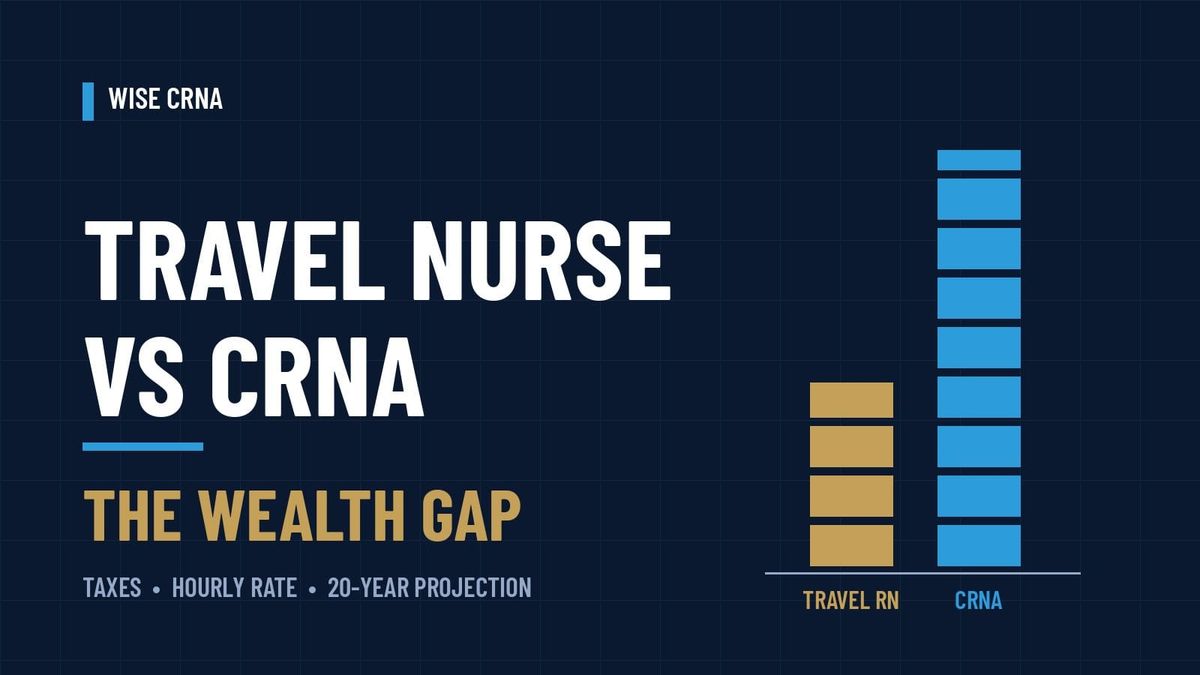
Travel nurse vs CRNA is one of the most common career questions ICU nurses ask, and it usually gets answered with a single number: the weekly rate on the next contract. That number is real, but it is incomplete. When you run the full comparison, including taxes, housing, hours worked, years in the role and what you can actually invest, the gap between the two paths is not small. It compounds into a wealth gap measured in millions.
This post walks through the numbers from our video, Travel Nurse vs. CRNA: The $1.2 Million Wealth Gap, and shows where the difference actually comes from.
Why Travel Nursing Looks Like the Top of the Ladder
For many ICU nurses, travel nursing feels like the natural peak of the ICU nurse career path. You pick your city, chase the highest-paying contracts and often out-earn your staff colleagues by a wide margin.
The problem is the ceiling. A traditional staff nurse role might offer stability and benefits at around a $100,000 salary. Travel contracts push that higher, but the pay is still tied to hours and contract availability. There is very little upward mobility built into the role itself.
The nurse anesthetist path is structured differently. The target in the video is roughly $300,000 a year, in a doctoral-level career with a much longer earning runway. The longer you delay the decision, the wider that gap gets.
Travel Nurse Salary vs CRNA Salary: The Purchasing Power Audit
Gross pay is the headline. Disposable income is what builds wealth. The video compares two realistic scenarios:
- Metro traveler (San Francisco): $150,000 gross, a 9.3% state income tax rate and average rent around $4,800 a month. Real disposable income: about $3,400 a month.
- Nurse anesthetist (Texas): $280,000 gross, no state income tax and an average mortgage around $2,400 a month. Real disposable income: about $14,200 a month.
That is a monthly surplus gap of more than $10,000. Location is not just a lifestyle preference. It is a wealth multiplier, and it applies to both careers. If you want to see how this plays out across the country, our breakdown of the highest paying states for CRNAs and the guide to CRNA salary after taxes go deeper on what you actually take home.
The Hourly Efficiency Gap
Annual pay hides how many hours it took to earn it. This is where the comparison gets uncomfortable for the traveler path.
- Traveler grind: about 60 hours a week to hold $150,000 a year works out to roughly $48 an hour.
- Anesthesia standard: a 36-hour week at $300,000 a year works out to roughly $160 an hour.
That is about 3.3 times more earning power per hour worked. In practical terms, the CRNA path can mean fewer working days per week for significantly more income. Time is the one resource you cannot earn back, so the hourly rate matters as much as the annual figure.
The Hidden Bill: 36 Months Without a Bedside Salary
To be fair, the CRNA path has a real cost, and it should be stated plainly. A doctoral nurse anesthesia program typically runs about 36 months, and for most students that means three years without a full bedside income.
The video estimates the cost of that period at roughly $1 million in lost earnings and growth when you count everything. The direct costs alone are significant:
- Tuition: the video uses a $150,000 tuition base for a 36-month program. Our CRNA school cost breakdown shows published tuition ranging from about $60,000 at in-state public programs to $180,000+ at private programs.
- Living expenses: around $40,000 a year for housing and groceries in the video's scenario.
- Interest: at a 7% rate, borrowed money adds up quickly. The video's high-end scenario puts total debt as high as $450,000.
Most programs strongly discourage outside work, so plan as if you will not have a paycheck. Our post on whether you can work during CRNA school covers what is realistic.
The key point: those 36 months are an investment in a career the video projects at around $6 million in lifetime earnings. Staying a traveler to avoid the three-year gap can feel safer, but over a full career it often costs far more than it saves.
The Monthly Surplus Gap and CRNA ROI
Wealth is built from surplus, the money left after taxes and fixed costs, not from gross salary. The video's 2026 "wealth accelerator" model makes this clear:
- Bedside traveler: $165,000 gross, high metro rent around $5,500 a month and 9.3% state tax leaves about $2,100 a month in surplus.
- Nurse anesthetist: $300,000 gross, no state income tax and lower regional housing costs leaves about $12,500 a month in surplus.
That is more than $10,000 a month of additional capacity to pay down debt, invest and build a cushion. This is also why the large debt load from school can be paid down far faster than most nurses expect. For a full return-on-investment view, see is CRNA school worth the cost.
The 20-Year Compound Interest Projection
The real separation happens when you project those surplus numbers forward. The video models both paths at the same 7% annual return over 20 years:
- Traveler investing $1,500 a month: about $785,000 after 20 years.
- Nurse anesthetist investing $6,500 a month: about $3.4 million after 20 years.
Same return, same time horizon. The only variable is how much you can put to work each month. In the video's model, that difference is the gap between working to a traditional retirement age of 67 and having the option to step back around age 48.
Career Longevity: How Long Can You Stay in the Game?
Earning power also depends on how many years you can keep earning at your peak. Bedside careers tend to be shorter. The video puts the average bedside run at roughly 7 to 10 years, and burnout is a well-known reason nurses leave or step back.
Anesthesia careers, by comparison, often last 25 to 30 years. The video estimates that this roughly 15-year difference in peak earning years is worth around $3 million in additional lifetime income. A longer career is one of the most valuable assets you have, and it is rarely part of the travel contract conversation.
Travel Nurse vs CRNA: The Two Trajectories Side by Side
Pulling the video's numbers together:
- Traveler path: retirement around 67, about $3.8 million in lifetime earnings and a 60-hour work week.
- Nurse anesthetist path: the option to retire around 48, about $6 million in lifetime earnings and a 36-hour work week.
The difference is roughly 19 years of time and more than $2 million in lifetime earnings. Your own numbers will depend on your state, contracts, program cost and spending, but the direction of the math is consistent.
Conclusion
Travel nursing is a legitimate way to earn well, and for some nurses it is the right fit. But if you are choosing it because it feels like the top of the ladder, run the full comparison first. The CRNA path costs three years and real debt. In return, it offers a higher ceiling, better pay per hour, a larger monthly surplus and a longer career to compound it. For many ICU nurses, the biggest financial risk is not the cost of CRNA school. It is staying put because the next contract looks good.
This post is general information, not financial advice. Figures are illustrative scenarios from the video, and your results will vary.
Frequently Asked Questions
Do travel nurses make more than CRNAs?
In the short term, a strong travel contract can out-earn a staff nursing role. Over a full career, the scenarios in this post show the CRNA path with higher annual pay, a higher hourly rate and a longer earning career, which adds up to millions more in lifetime earnings.
How much does CRNA school cost?
Published tuition ranges from about $60,000 at in-state public programs to $180,000+ at private programs, before living expenses. Including living costs and interest, the video's high-end scenario puts total debt as high as $450,000.
Can you keep travel nursing during CRNA school?
For most students, no. Programs are full-time and most strongly discourage outside work, so plan for about three years without a full nursing income.
Is the CRNA path worth giving up travel nursing income?
For many ICU nurses, the long-term math favors it: a larger monthly surplus, faster debt payoff and decades of compounding. It depends on your finances, location and goals, so run your own numbers before deciding.
Want more data-driven CRNA career breakdowns like this one? Join the Wise CRNA newsletter and get the free 2026 CRNA Starter Kit.